
Careers in Banking: Why authenticity matters
Reading time: 6min
9 April 2026
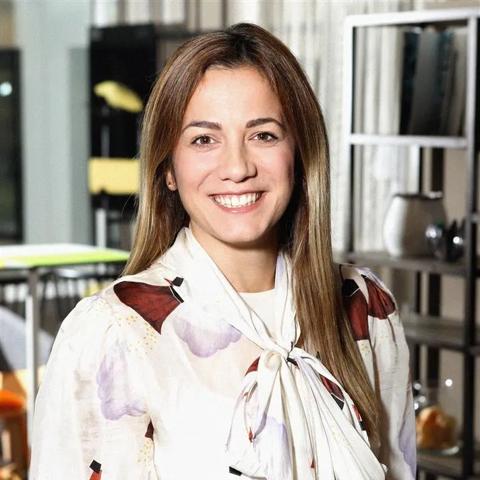
Careers in banking are rarely linear – and sometimes they start with a simple coincidence. For Sanja Rankov, what began as an uncertain step in a new country turned into a 12-year journey at ING. Today, she reflects on growth, self-doubt, stereotypes – and why authenticity is one of the most powerful leadership strengths.
How did you get into banking – and how did you end up at ING?
Honestly, it was quite coincidence. I studied economics and finance and came to Germany for my master’s degree. Like many others around me, I noticed that a lot of people were doing internships in banking and thought to myself: I should at least give it a try. At the time, my German wasn’t good enough yet, and overall everything felt quite overwhelming – a new country, new people, no family or friends around me. It was the first time I was truly on my own. And I didn’t trust myself enough to apply to a German bank. I assumed I would be rejected anyway.
So instead, I applied for an internship at a Spanish bank – and I was accepted. There, I built a close connection with a colleague who told me about ING’s growth plans in Germany. She encouraged me to apply and connected me with someone at the bank.
That was almost 12 years ago. Back then, Wholesale Banking in Germany was still very small. Looking back, I am amazed by how much everything has grown since then – and I am proud to be part of that journey. It was my first real job, and I am still here – that probably says a lot.
Have you ever felt that you were perceived differently as a woman in your career?
Yes, definitely. The biggest challenge for me was becoming a mother – twice – and then returning from maternity leave afterward. Each time, I came back to a workplace that had changed: new people, new processes, and in one case even a fully virtual environment due to COVID. At the same time, stereotypes still exist. Some people assume that you are less committed or less ambitious if you work part-time or have children.
What I noticed is that I started to doubt myself. And one sentence in particular has really stayed with me:
“For women, self-doubt often becomes a form of self-protection.”
Instead of challenging such assumptions or expectations directly, we often start by doubting ourselves first. We downplay our own strengths before others do. Not out of insecurity, but because we have learned that restraint is socially rewarded. The challenge is to recognize when this mechanism protects us – and when it holds us back. Over time, I have learned how important self-confidence and self-awareness are. I had to become clear with myself about what I am capable of – and also show it to others. Being a mother or working part-time does not make you less motivated or less capable.
Today, I also believe that it is important to speak up, to share your perspective - and in doing so, create space for others to open up as well. That has not only helped me, but has also encouraged others around me.
Are there any stereotypes or clichés you would like to break?
Yes, there are two that I hear quite often. The first is: “She only got the position because she is a woman.” You often encounter this in the context of quotas or diversity targets – and I find it very problematic. Because this statement retrospectively questions performance. It ignores qualifications and experience and forces women to repeatedly prove their competence.
The second cliché is more personal: “You are too emotional.” – often linked to my Southeast European background. But I have learned to see this differently. Being emotional does not have to be negative. It can mean being empathetic, understanding people better, and looking beyond pure facts. It helps to ask the right questions and develop better, more thoughtful solutions.
For me, emotional intelligence is a strength – especially in leadership. You don’t have to change who you are to be successful. Authenticity and leadership are not mutually exclusive – on the contrary, they reinforce each other.
Do you feel supported by ING’s culture?
Yes – overall, I do. Otherwise, I probably wouldn’t have stayed for over a decade.
ING has supported me in many ways: as an international employee, as someone who initially did not speak German, and as a working mother. Especially over time, I have gained trust and respect – even while working part-time. There are many initiatives in the area of Diversity & Inclusion, and I believe that ING is ahead of many other companies in this respect.
At the same time, I think there is still room for improvement. One point is that there are still not enough visible role models for people with different backgrounds. Representation matters – people need individuals they can relate to. This is not unique to ING; I see it across the entire industry.
We talk a lot about diversity and are moving in the right direction. But there is still a gap between what we say and what we actually live in everyday practice. Building on that, I see a special responsibility for women in leadership positions: not to unconsciously protect the system that worked for us personally, but to critically question it again and again and help make it more open for future generations.
Looking back, would you do anything differently?
I wouldn’t change my overall career path – I am very happy with where I am today. But during challenging moments, I sometimes wish I had trusted myself more and moved through those phases faster. I tend to overthink things – and that can slow you down. At the same time, it is precisely these experiences that have shaped who I am today.
What advice would you give to your younger self or to young people at the beginning of their careers?
One of the most important things I have learned is this: Authenticity and success are not opposites – on the contrary, they can go hand in hand. So be yourself, but at the same time remain open to people who are different from you – because diverse perspectives make us stronger as a team. This also means not being afraid to speak your mind – even if it feels uncomfortable. Honest feedback, even when it is difficult, is what helps us grow.
At the same time, it is crucial to be aware of your own strengths and weaknesses. Trust and respect do not develop overnight, but grow over time – and self-reflection is the foundation.