
Career in Banking: Why Networks Are Essential
Reading time: 5min
25 March 2026
Nikola’s path into banking began with a simple decision after finishing school – and developed into a career with more than two decades of experience in the industry.
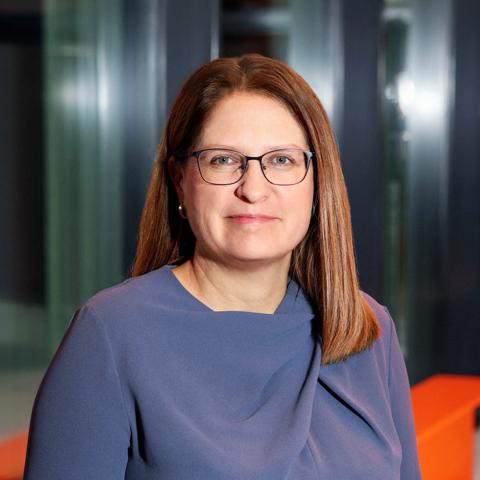
Today, she is Head of Credit Risk Management WB at ING. In this interview, she explains why networks play a crucial role in banking, what challenges she has encountered along the way, and why it’s important to seize opportunities proactively.
How did you get into banking – and how did you end up at ING?
After finishing school, I initially didn’t want to go to university. I thought about which areas might interest me and looked for something that had an international aspect. At the time, I had two options in mind: hotel management or banking. In the end, I decided on bank training and sent out five applications – and among the three positive responses was Commerzbank. That’s how I joined Commerzbank, completed my training there, and later studied while working. Altogether, I was there for about ten years, followed by another ten years at the Royal Bank of Scotland (now NatWest). I came to ING through a former colleague. He had already been with the Corporate Lending Team for one and a half years and told me how exciting the work was. That made me curious.
What was one of the biggest challenges in your career path?
A major challenge for me was the moment I became a mother. Before that, my job was very intense; I often worked at high speed and was deeply involved in everything. Suddenly, I had a small child, and my everyday life looked completely different. When I returned to work, it was a significant challenge to balance my own expectations for my job with the desire to be present for my family as well.
It took a while before I found a model that worked for me.
Have you experienced being perceived differently as a woman throughout your career?
In the areas I worked in – for example, acquisition finance – there were very few women for a long time.
I remember many meetings that began with the words: “Ms. Kopp, gentlemen.”
In addition, I sometimes notice as a woman that I am less naturally included in informal networks – for example, in after-work conversations or discussions about topics that tend to take place in male-dominated groups.
All the more reason why it’s important to actively build a personal network.
Did you have role models along your career path?
Not in the classic sense. When I started working, many leadership positions were held mainly by men. Instead, I looked at which leaders particularly impressed me and which qualities I appreciated in them. From that, I developed my own style.
Looking back, would you do anything differently?
One aspect I would pay much more attention to today is active career planning.
In the past, I made many decisions more intuitively. That’s exactly why I now recommend creating a clear development plan together with your manager and regularly discussing which next steps might make sense.
Having a clearer plan and building contacts deliberately can be very helpful.
What advice would you give to people who want to pursue a career in banking?
If I’ve learned one thing, it’s to recognize opportunities in a dynamic environment and to trust in your own strengths – instead of being discouraged by change. And I’ve emphasized it several times because it’s so important: networking, networking, networking – both internally and externally.
Over time, I’ve gotten into the habit of simply grabbing a coffee with new contacts. These conversations have actually led to new professional opportunities later on.
And finally: Be courageous. When opportunities arise, it’s worth seizing them.