
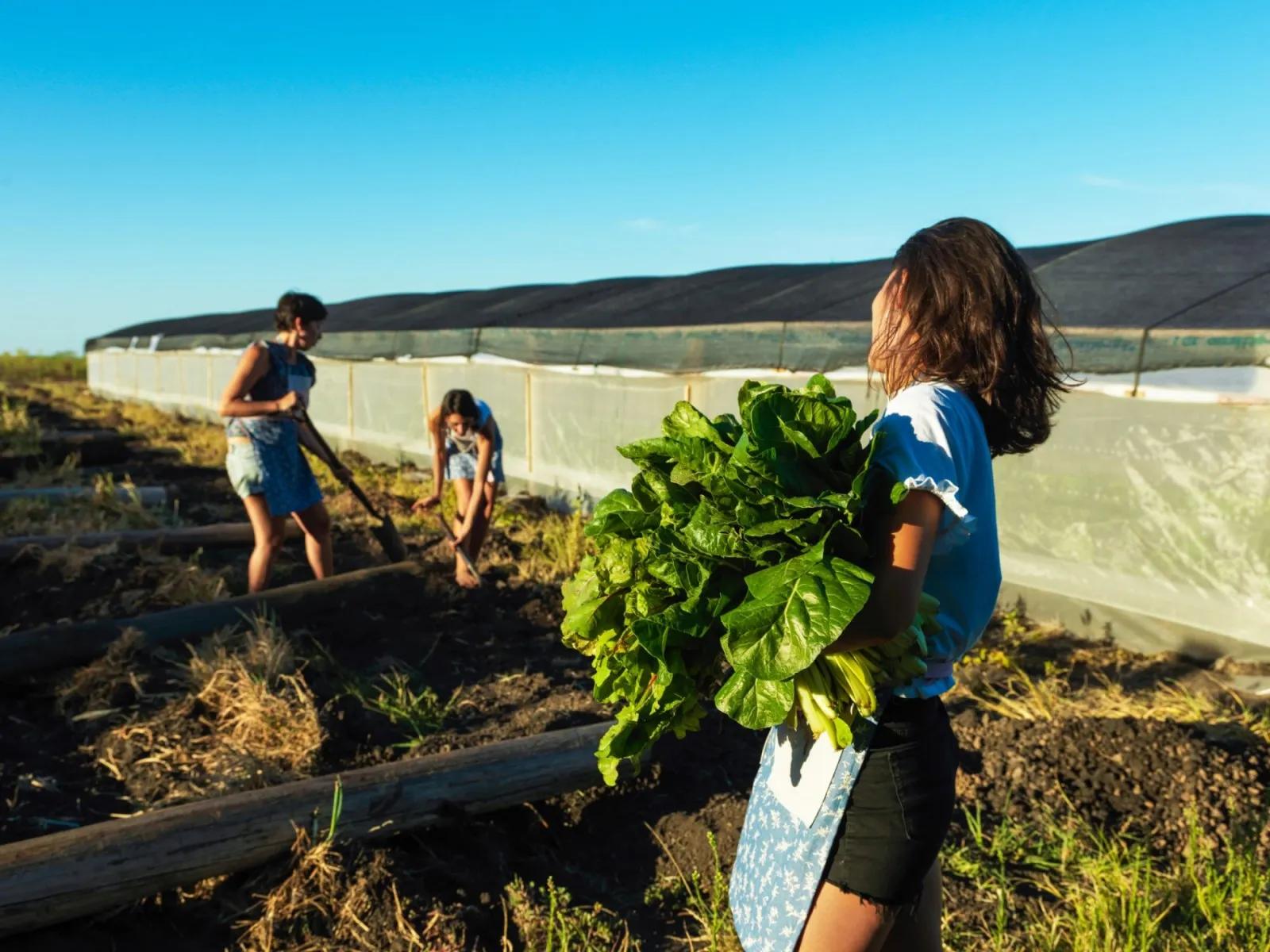
Cultivating progress in the Philippines’ food and agriculture sector
Reading time: 5min
2 September 2025
In a by-lined article for Manila Standard, Jun Palanca, ING’s country manager for the Philippines, highlights the Asia Pacific region’s central role in global food and agriculture and outlines how the Philippines can strengthen its agricultural sector. He emphasises the need for transformation to meet rising global demand, enhance food security, and build climate resilience amid increasing environmental pressures.
The Asia-Pacific region continues to be the beating heart of global food and agriculture (F&A). By 2030, the region is expected to account for over half of global agricultural output, driven by rising populations, shifting consumer preferences, and ongoing innovation across the value chain. From China’s leadership in cereals and seafood to Indonesia’s dominance in palm oil and Vietnam’s expanding export markets, Asia is not just feeding itself – it is also feeding the world.
How does the Philippines fit into this evolving landscape? More importantly, how can the country position itself to thrive in an increasingly complex and competitive global food system?
At a crossroads: The case for transformation
Agriculture remains a cornerstone of the Philippine economy – supporting millions of livelihoods, contributing to national food security, and offering significant potential for export growth. But for years, the sector has struggled with deep-rooted structural challenges: low productivity, ageing infrastructure, exposure to extreme weather, and a persistent reliance on food imports to meet domestic demand.
Encouragingly, there are signs that this is beginning to change. Opens in a new tabRecent data points to a narrowing agricultural trade gap, driven by stronger export performance and a recalibration of import flows. While the country is not yet fully self-sufficient, these early signals suggest that Philippine agriculture can become more globally competitive and less dependent on foreign supply, provided the right conditions are in place.
Still, the need for transformation remains clear. Climate disruptions continue to threaten crops and communities. Consumers are demanding higher standards in food quality, sustainability, and transparency. And producers must navigate increasingly complex supply chains, both domestically and internationally.
In this context, the challenge is not only to produce more – but to produce smarter, more sustainably, and with stronger linkages to global markets. Doing so will require coordinated efforts across policy, finance, and industry, and a shared vision for the future of Philippine agriculture.
A new chapter for Philippine agriculture
The Philippine government has taken proactive steps to strengthen and modernise the sector. The Opens in a new tabPhilippine Development Plan 2023–2028 identifies agricultural transformation as a national priority, aiming to raise productivity, ensure food security, and enable inclusive growth.
The Opens in a new tabMasagana Rice Industry Development Program aims to modernise rice production – the country’s staple crop – through the adoption of improved technologies and climate-smart farming practices.
Meanwhile, the Adapting Philippine Agriculture to Climate Change programme, a Opens in a new tabUSD 39.2 million initiative supported by international development partners, is building resilience in vulnerable farming communities.
While these programmes are vital, their long-term success depends on strong implementation and financing, especially from the private sector.
Finance as a lever for change
Unlocking the full potential of Philippine agriculture requires more than public policy or grassroots effort. It demands long-term commitment from private sector players who understand the complexity of food systems and are willing to work across borders, sectors, and supply chains.
As a bank with deep roots in food and agriculture financing, ING sees our role not just in providing capital, but in helping build the conditions for sustainable growth.
For one, we work with companies looking to expand beyond local markets – whether that’s securing trade flows, entering new regional supply chains, or raising capital to support outbound investment. Our international network gives us a bird’s-eye view of where opportunities are emerging, and how Philippine firms can tap into them.
We also support global food and agriculture players seeking to invest or scale in Southeast Asia, including the Philippines. Having local expertise on the ground and a presence across key F&A markets in Asia-Pacific enables us to facilitate these connections – bringing international ambition and local opportunity into alignment.
Our sector focus is another differentiator. Food and agriculture is one of ING’s core coverage sectors globally, which means we approach the industry not just as financiers, but as partners who understand the nuances of everything from commodity volatility to processing trends and changing consumer behaviour. That context shapes the way we engage – with solutions that are relevant to each client’s position in the value chain.
Importantly, we see sustainability as integral to long-term competitiveness in the F&A space. That’s why we’ve been at the forefront of designing financial solutions that link cost of capital to measurable environmental and social outcomes.
For instance, ING supported the refinancing of a Opens in a new tabUSD 680 million sustainability-linked facility for global agri-commodities group Sucden, aligning financing terms with measurable progress on responsible sourcing and supply chain decarbonisation. In another example, we arranged a Opens in a new tabUSD 2.1 billion SLL for multinational F&A firm COFCO International, with terms linked to sustainability milestones across its operations and global supply chain.
These are more than transactions. They demonstrate how finance can act as a catalyst, and not just a conduit, for long-term transformation.
A regional network, rooted in local insight
Recognising the strategic importance of Asia-Pacific’s food systems, ING deepened our F&A franchise in 2025 by expanding our dedicated sector team across the region. The APAC F&A team is fully embedded within ING’s global network, ensuring seamless cross-border collaboration and knowledge sharing – whether clients are local champions with outbound ambitions or multinationals looking to invest in Southeast Asia.
In the Philippines, ING has built a long-standing track record across debt capital markets, corporate finance, and strategic advisory. Our Manila branch continues to support leading corporates with tailored solutions ranging from managing currency exposure to structuring complex transactions.
In the F&A sector, we are proud to partner with companies as they navigate change – whether that’s investing in greener operations, building supply chain resilience, or entering new markets. Beyond bilateral engagements, we also convene regional and global dialogues, such as the Food Transformation Forum in the Netherlands, bringing together policymakers, industry leaders, and financiers to collectively address systemic challenges.
These platforms are critical to building trust and shared direction. They also offer valuable insights that can be translated into tangible action in markets like the Philippines.
A shared vision for the future
The Philippines stands at a pivotal moment. With strong policy direction, a growing consumer base, and natural endowments, it is well-positioned to become a leader in sustainable agriculture in Southeast Asia.
But success will require a shared commitment – from government, business, and finance. ING is proud to be part of this journey, not just as a financier, but as a strategic partner dedicated to long-term impact.
With the right partnerships and bold ambition, the Philippines can build a food system that is more productive, inclusive, and resilient – setting a benchmark for the region and beyond.
Originally published on Manila Standard: Opens in a new tabhttps://manilastandard.net/tech/314637605/cultivating-progress-in-the-philippines-food-and-agriculture-sector.html